Embers
Reframing Light as a Wellness Tool
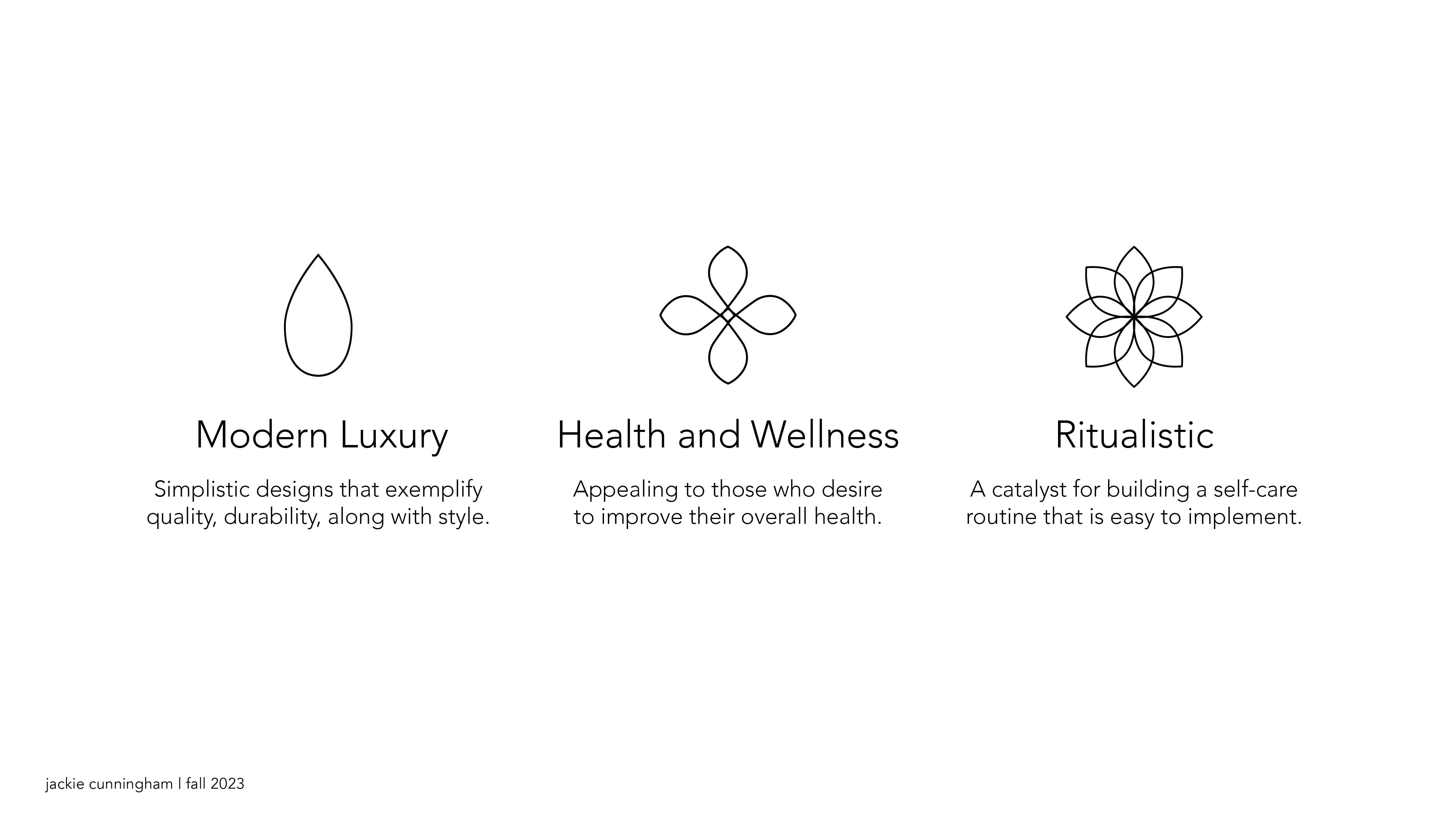
A wellness-driven lamp design exploring how warm light and organic form can become a catalyst for intentional rest.
Consumer
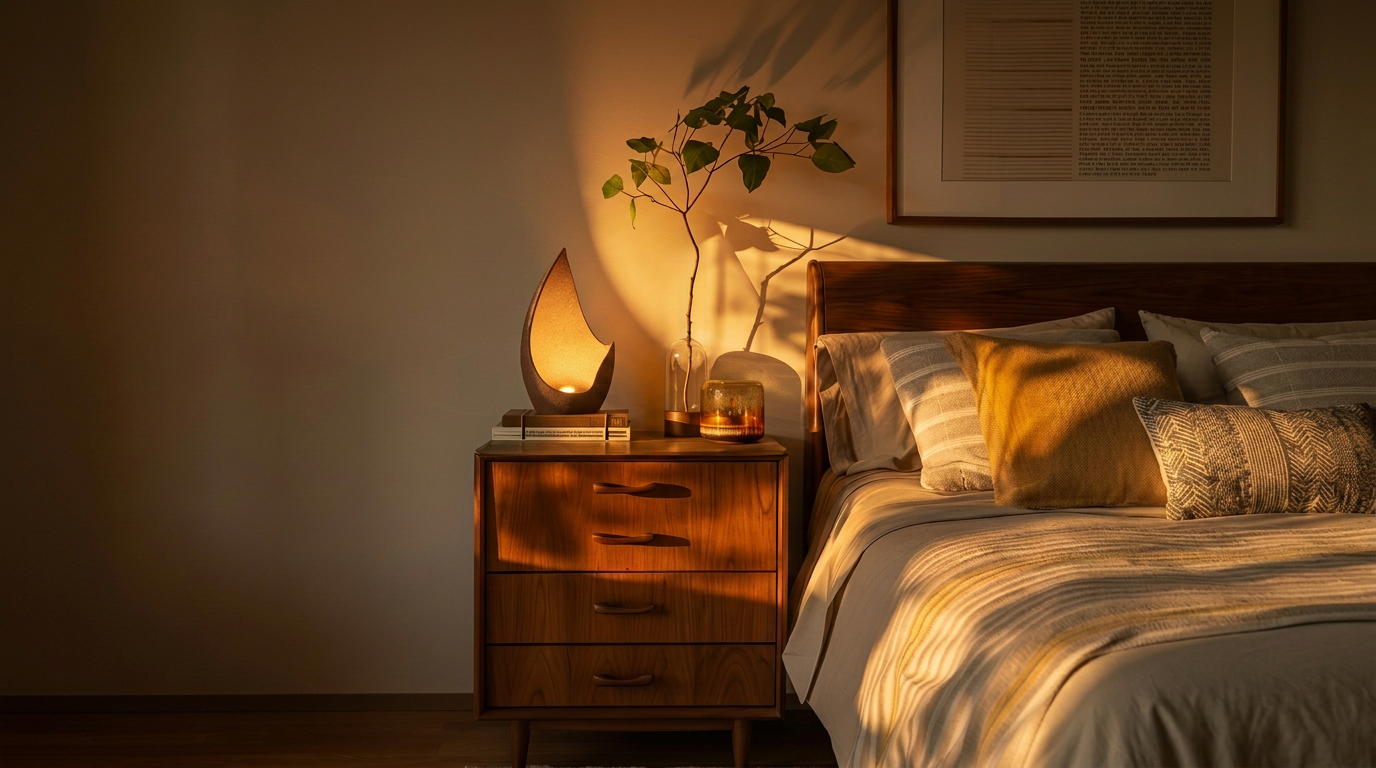
Light is one of the most underdesigned variables in a wellness routine. Most table lamps are utilitarian objects... functional, forgettable, and disconnected from the people using them. Embers started from a different question: what would it mean for a lamp to feel like it belongs in a self-care ritual?
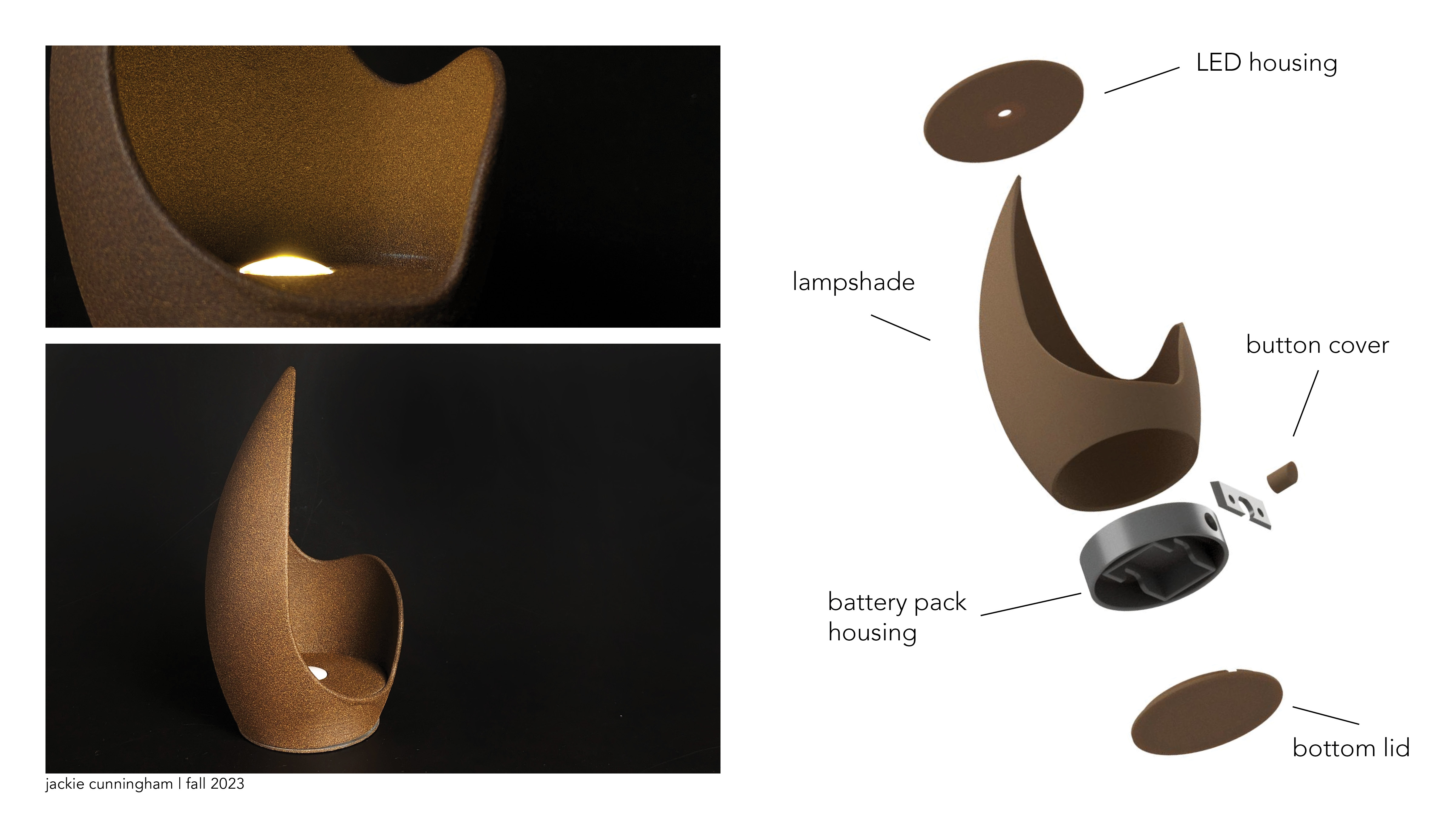
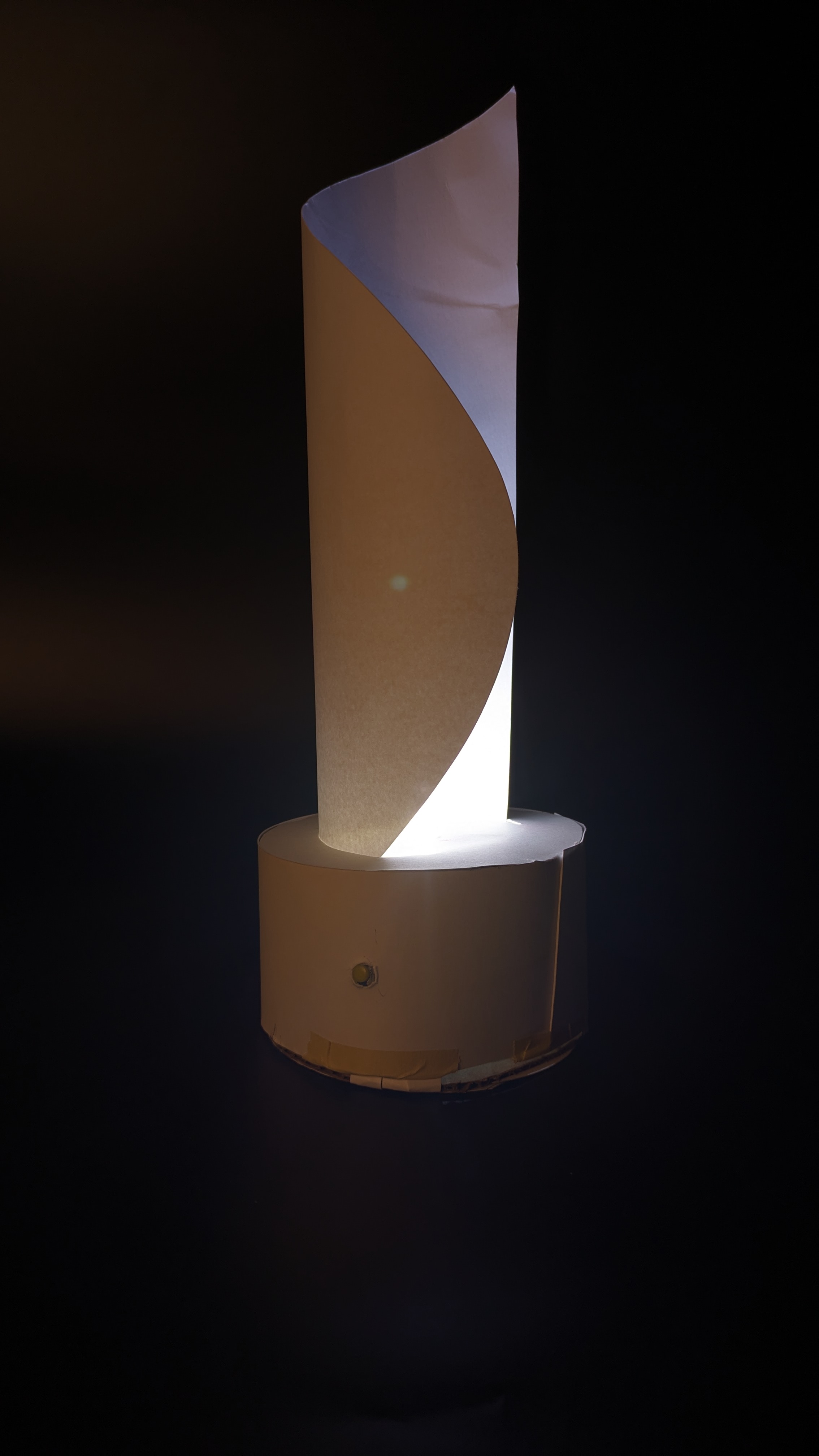
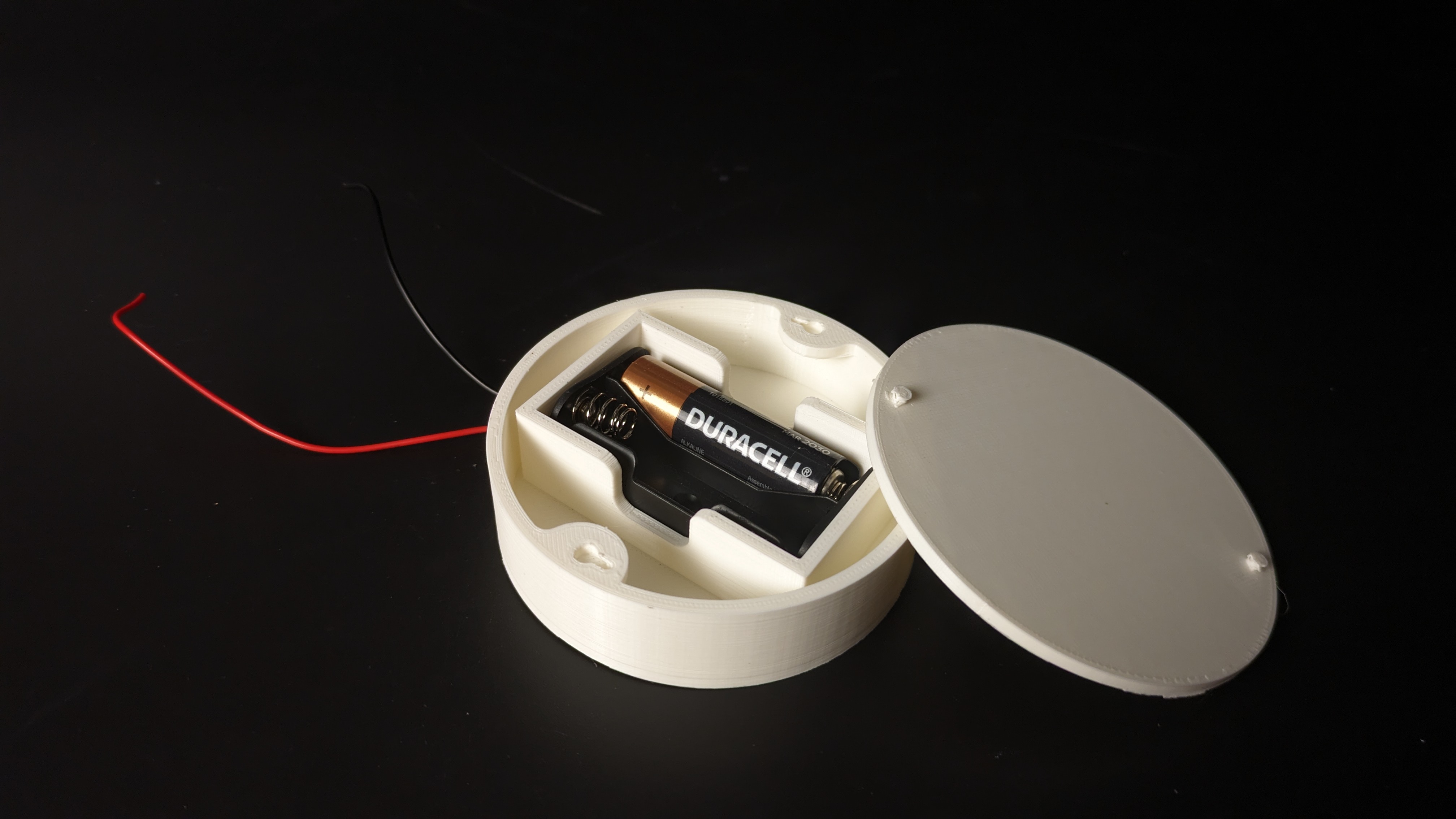
Embers is a battery-powered ambient lamp designed for the health-conscious home. Its flame-derived silhouette and warm-diffused LED cast soft, directional light that creates atmosphere without overstimulation. The cork-textured exterior grounds the object in natural materiality, while the fully self-contained battery housing makes it cordless, portable, and renter-friendly; quietly removing the friction between intention and environment.
The home wellness market is full of products that gesture toward calm — candles, diffusers, soft textiles — but lighting rarely participates in that conversation with the same intentionality. Most battery-powered lamps optimize for brightness and portability, not mood or ritual. The design brief called for a fully functional battery-powered lamp, but the real challenge was formal: how do you create an object that communicates warmth, calm, and craft before it's even switched on?
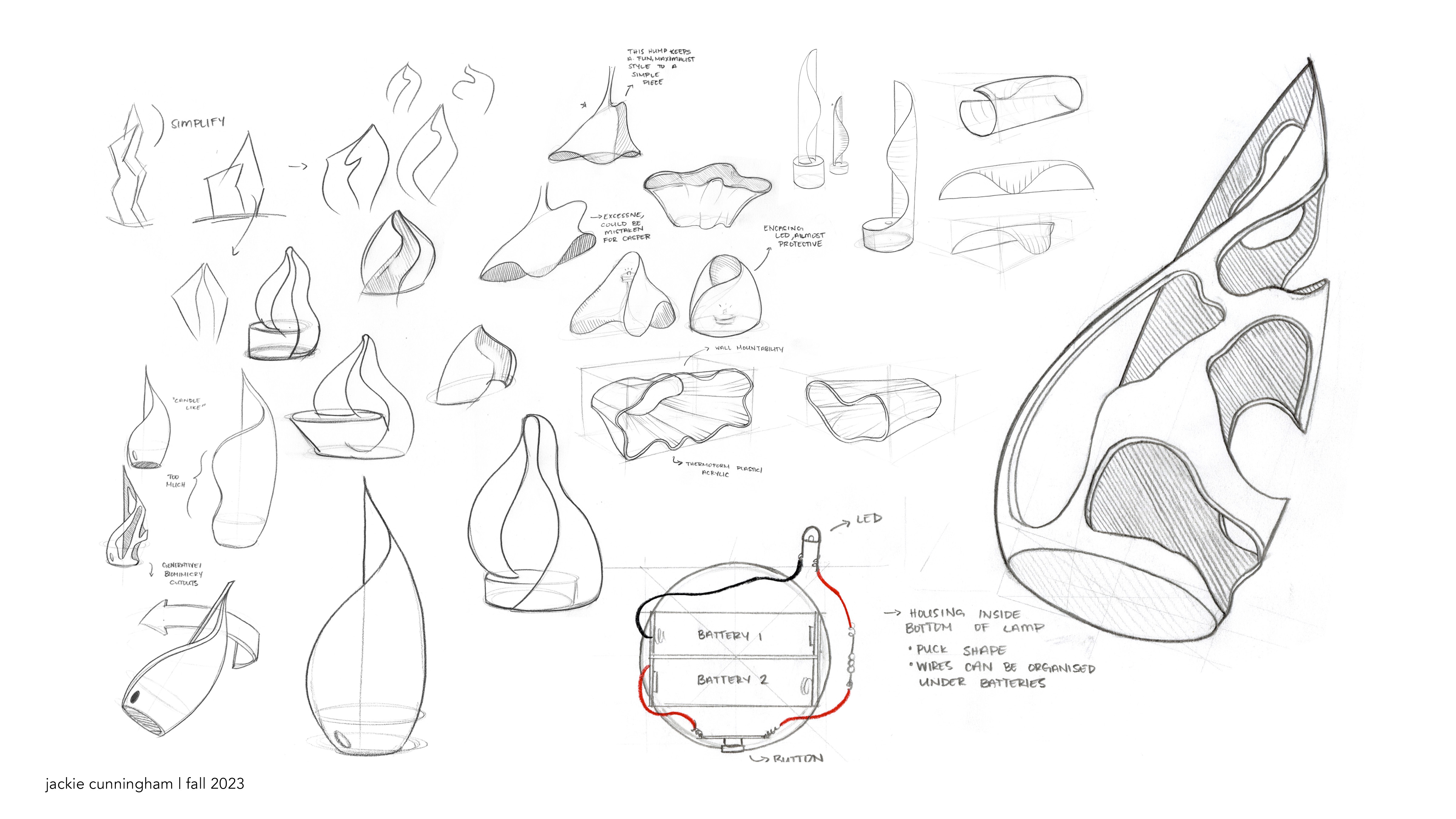
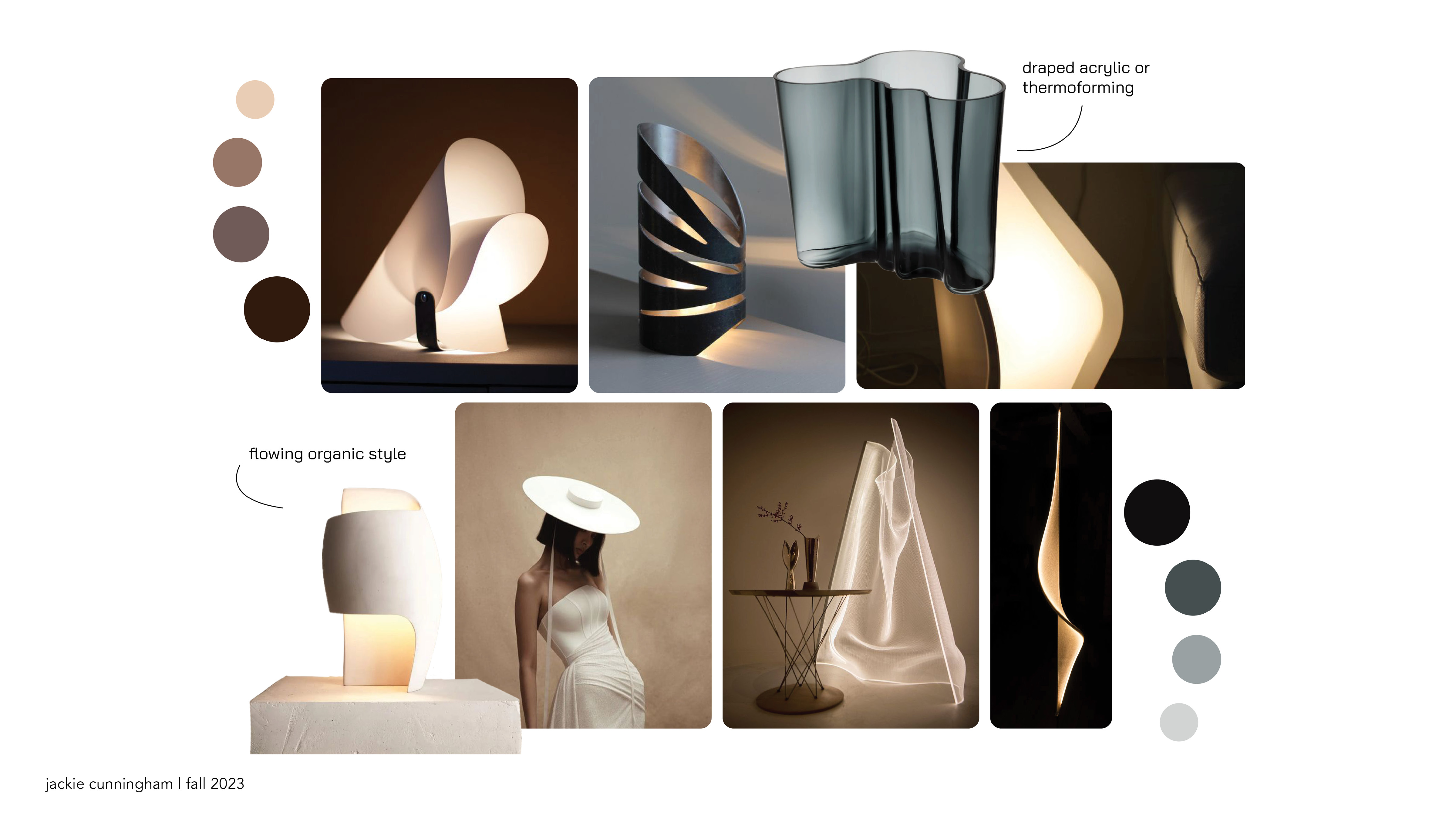
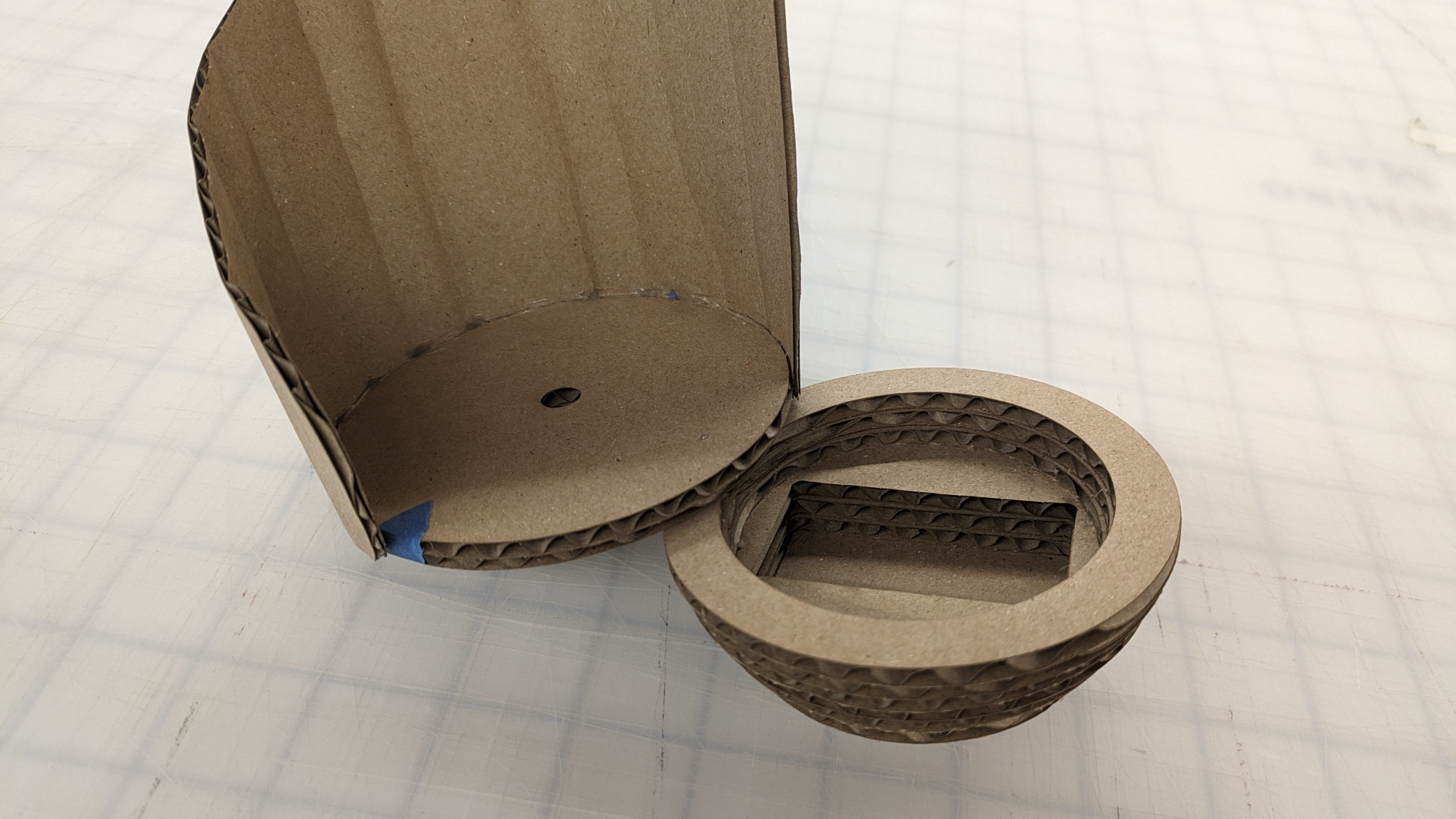
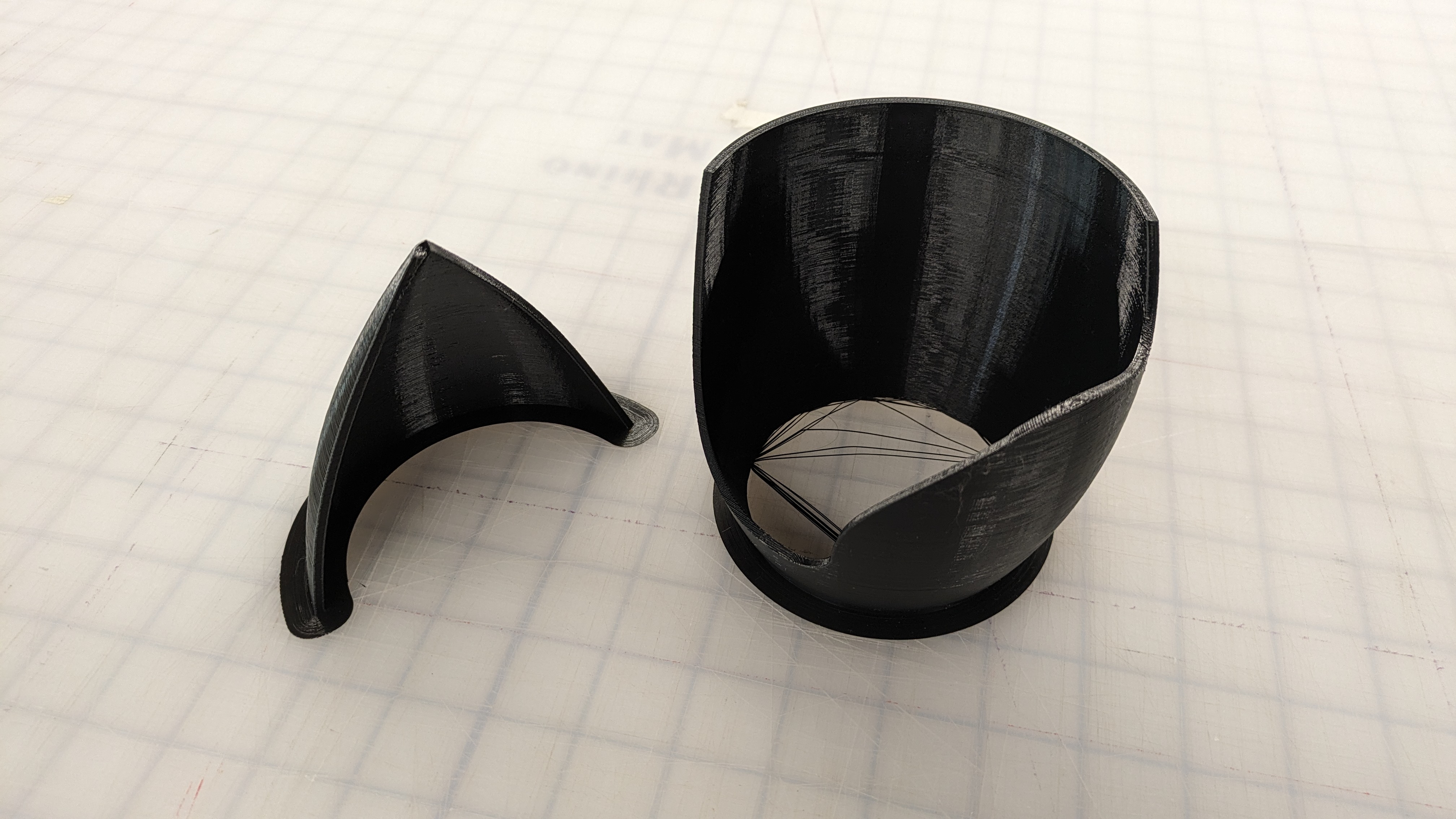
Early research into Seasonal Affective Disorder, LED light therapy, and the psychological effects of warm versus cool light established a clear direction: warm, ambient, sub-3000K light is the most restorative for spaces designed around rest and focus. Rather than treating the lampshade as a neutral housing, the form was developed to work with the light — abstracting a flame shape that guides the eye upward and diffuses glow through a textured translucent shell. A five-component internal architecture conceals the battery pack, LED housing, and button mechanism within a puck-form base, keeping the exterior silhouette clean and the interaction simple.
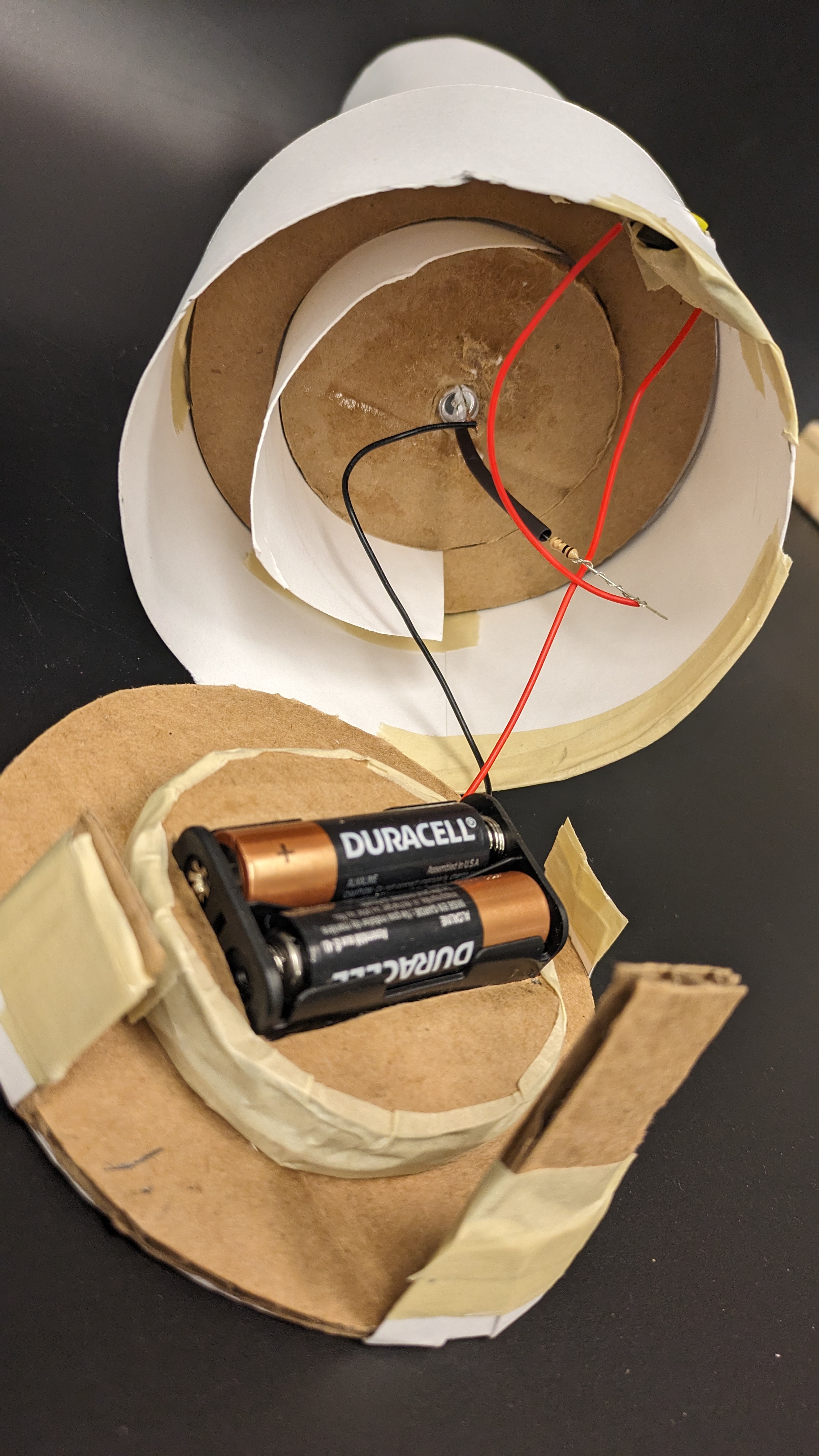
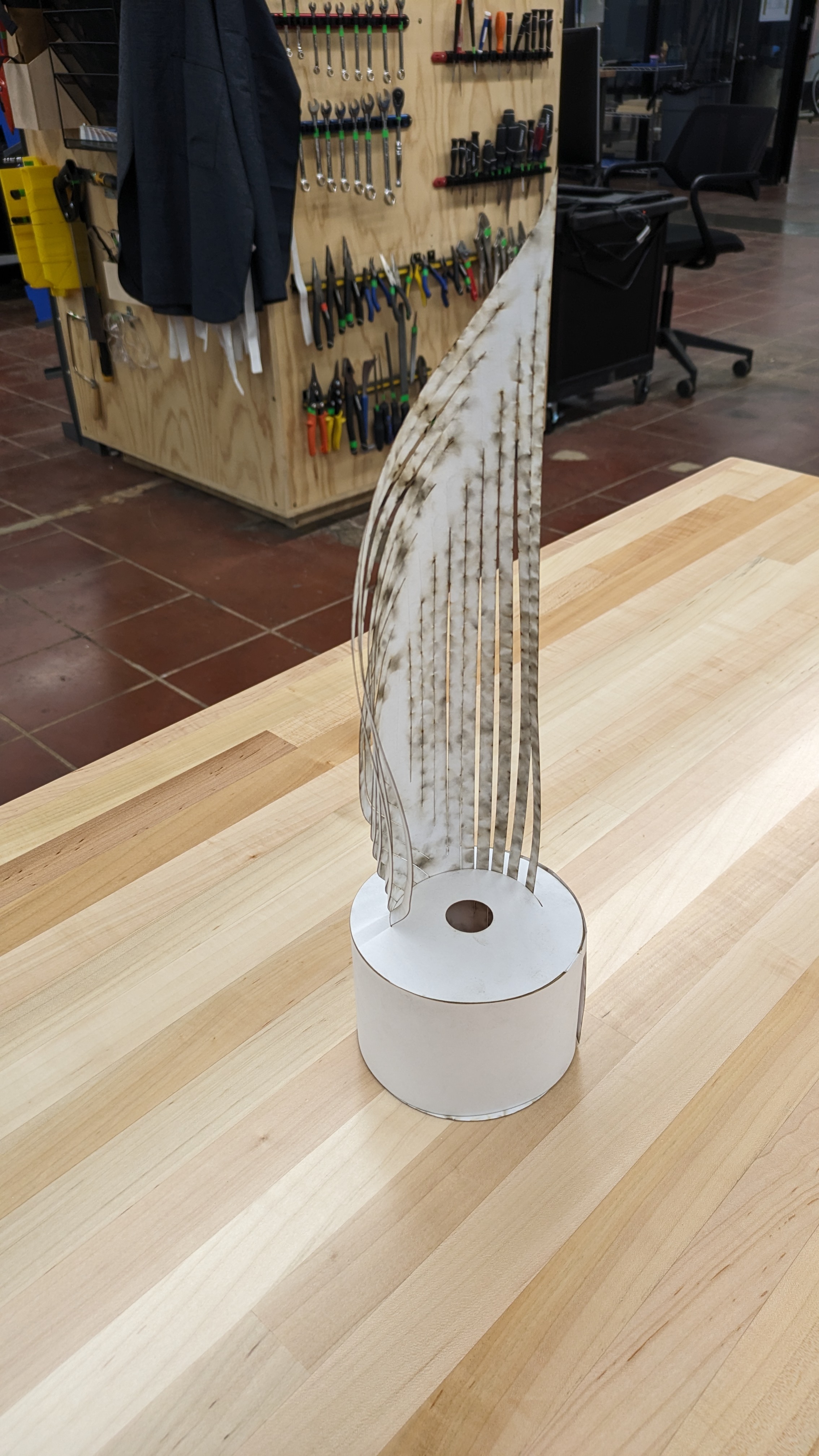
Embers was realized from sketch through CAD, physical prototyping, and high-fidelity KeyShot rendering. Multiple cardboard and foam prototypes were built to resolve the relationship between the shell geometry, light diffusion, and base proportion before final CAD was developed. The result is a lamp that earns its place on a desk not through decoration, but through the quality of the atmosphere it creates — a small object that proves good design can make an ordinary moment feel considered.


Read the full lookbook.